

Send Message
Privacy statement: Your privacy is very important to Us. Our company promises not to disclose your personal information to any external company with out your explicit permission.





Materials Science and Engineering is an interdisciplinary field dedicated to the discovery and design of new materials. It focuses on the relationship between a material's structure, its properties, and its processing methods. By understanding these fundamental connections, engineers can develop innovative solutions for complex global challenges.
This field integrates physics, chemistry, and engineering principles to create advanced materials that meet specific performance requirements. From lightweight alloys in aerospace to biocompatible polymers in medicine, materials science drives technological progress across all industries.
Modern manufacturing relies on computer-controlled machinery to achieve microscopic precision. Advanced fabrication techniques ensure that every component meets strict dimensional tolerances and surface finish requirements.
Comprehensive testing protocols verify material integrity at every production stage. Non-destructive evaluation methods detect internal flaws without damaging the product, ensuring reliability in critical applications.
Eco-friendly manufacturing processes minimize waste and energy consumption. Recycling programs and green chemistry approaches reduce environmental impact while maintaining high-performance standards.
State-of-the-art laboratories utilize electron microscopy and spectroscopy to analyze material composition. These tools enable precise control over microstructure, leading to superior mechanical and thermal properties.
Selecting the optimal material requires balancing multiple factors including mechanical strength, thermal stability, corrosion resistance, and cost-effectiveness. Engineers must evaluate how materials will perform under real-world operating conditions.
Consider temperature extremes, chemical exposure, and mechanical stress. Materials must maintain their structural integrity throughout their intended service life in harsh environments.
Beyond initial purchase price, consider maintenance, replacement frequency, and disposal costs. High-performance materials often provide better long-term value despite higher upfront investment.
Some materials offer excellent properties but are difficult to shape or join. Select materials compatible with existing manufacturing processes to optimize production efficiency and reduce defects.
Ensure materials meet industry-specific standards and safety regulations. Certifications guarantee consistent quality and help streamline procurement approval processes.
Use this comprehensive checklist to evaluate potential suppliers and materials for your next project. Systematic assessment ensures you select partners who can deliver consistent quality and technical support.
Materials science innovations power breakthroughs across diverse sectors. Understanding application-specific requirements helps buyers identify specialized suppliers with relevant expertise.
Ultra-lightweight composites and heat-resistant alloys enable faster, more efficient aircraft. Materials must withstand extreme pressures and temperatures during flight operations.
Bio-compatible polymers and titanium alloys are essential for implants and surgical instruments. Materials must interact safely with human tissue while maintaining durability.
High-purity silicon and conductive polymers drive miniaturization in consumer electronics. Thermal management materials prevent overheating in dense circuit boards.
Advanced photovoltaic cells and battery electrodes rely on novel material formulations. Efficient energy storage materials accelerate the transition to sustainable power grids.
High-strength steel and carbon fiber composites improve fuel efficiency and crash safety. Lightweight materials reduce emissions while maintaining passenger comfort.
Self-healing concrete and corrosion-resistant coatings extend the lifespan of bridges and buildings. Sustainable building materials reduce the carbon footprint of urban development.
Procuring specialized materials often presents unique obstacles. Buyers frequently encounter issues related to specification mismatches, supply chain volatility, and technical compatibility.
Generic material grades may not meet specific engineering tolerances. Clear communication of exact requirements prevents costly rework and production delays.
Geopolitical events or natural disasters can halt raw material flows. Diversifying suppliers and maintaining strategic inventory buffers mitigates these risks.
When primary materials are unavailable, alternatives must be rigorously tested. Unverified substitutions can compromise product safety and performance.
Regulatory approvals often take longer than anticipated. Early engagement with certification bodies streamlines the compliance process for new material introductions.
Metallurgy is a subset of materials science focused specifically on metals and their alloys. Materials science encompasses a broader range including ceramics, polymers, composites, and electronic materials, studying their structure-property relationships comprehensively.
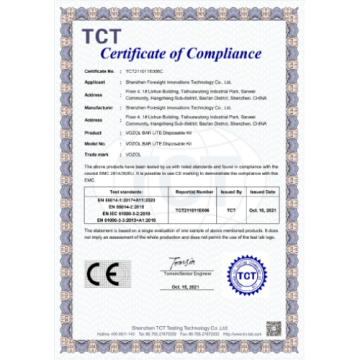
Request certificates of conformity and independent laboratory test results. Reputable suppliers provide full traceability documentation linking the delivered material to its original production batch and chemical composition analysis.
Advancements in recycling technology have significantly improved the quality of recovered materials. Many recycled polymers and metals now meet or exceed the mechanical properties of virgin counterparts, offering sustainable alternatives without compromising performance.
Standard off-the-shelf materials typically ship within days. Custom formulations or specialized processing can require weeks or months depending on complexity. Discuss timelines early in the procurement process to align with project schedules.
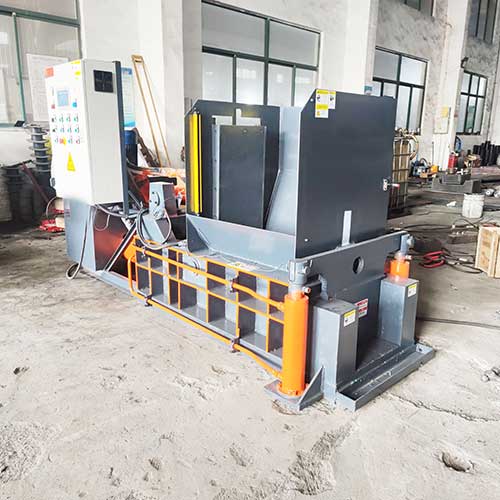
Explore our extensive portfolio of engineered materials designed for demanding industrial applications. From high-temperature ceramics to flexible electronic substrates, we provide solutions that push the boundaries of what's possible.
Privacy statement: Your privacy is very important to Us. Our company promises not to disclose your personal information to any external company with out your explicit permission.
Fill in more information so that we can get in touch with you faster
Privacy statement: Your privacy is very important to Us. Our company promises not to disclose your personal information to any external company with out your explicit permission.