
Send Message
Privacy statement: Your privacy is very important to Us. Our company promises not to disclose your personal information to any external company with out your explicit permission.







Understanding the core definition and application of heat resistant material in industrial settings.
Heat resistant material refers to specialized substances engineered to maintain structural integrity and functional performance under extreme thermal conditions. Unlike standard materials that degrade or melt at elevated temperatures, these advanced solutions provide critical protection for machinery, personnel, and infrastructure in high-heat environments.
In industries ranging from metallurgy to aerospace, the demand for reliable heat resistant material is paramount. These materials act as a barrier against thermal transfer, ensuring safety and operational continuity where conventional fabrics or polymers would fail immediately.
Ensuring consistent quality in heat resistant material production through rigorous testing and modern manufacturing.
Our heat resistant material manufacturing utilizes state-of-the-art weaving and coating technologies. This ensures uniform thickness and consistent thermal resistance across every meter of fabric produced. The integration of automated quality control systems minimizes human error and guarantees precision.
Every batch of heat resistant material undergoes strict laboratory testing. We evaluate tensile strength, elongation, and thermal shrinkage rates. Only materials that meet international safety standards are approved for shipment, ensuring reliability in critical applications.
We prioritize raw materials that offer high performance with minimal environmental impact. Our supply chain is vetted for ethical sourcing and compliance with global environmental regulations, supporting sustainable industrial practices.
A strategic guide for selecting the optimal heat resistant material for your specific industrial requirements.
Determine the maximum continuous temperature and peak exposure levels your application will face. Different heat resistant material types (e.g., fiberglass, silica, aramid) offer varying thermal limits.
Identify if the material will come into contact with acids, alkalis, or solvents. Some heat resistant material variants are chemically inert, while others may degrade upon exposure to specific substances.
Consider tension, abrasion, and flexibility needs. Applications requiring frequent bending need more flexible heat resistant material than those used for static insulation.
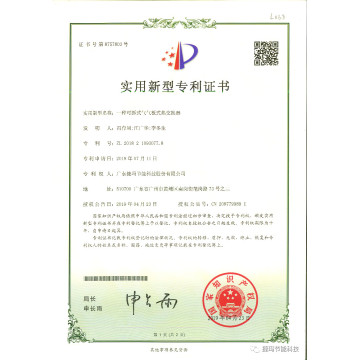
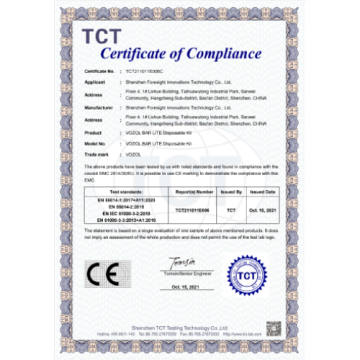
Ensure the supplier provides documentation such as ISO certifications or industry-specific approvals (e.g., UL, CE) to guarantee compliance with safety regulations.
Use this checklist to validate suppliers and specifications before purchasing heat resistant material.
Standardized data structure for heat resistant material product listings to enhance search visibility.
// JSON-LD Structure for Heat Resistant Material Product
{
  "@context": "https://schema.org/",
  "@type": "Product",
  "name": "Industrial Heat Resistant Fabric",
  "description": "High-performance heat resistant material designed for extreme thermal environments.",
  "brand": {
    "@type": "Brand",
    "name": "Haixi Hengtai"
  },
  "material": "Fiberglass / Silica / Aramid",
  "thermalResistance": {
    "@type": "QuantitativeValue",
    "value": "500",
    "unitCode": "CEL"
  },
  "certification": ["ISO 9001", "CE"]
}
Addressing frequent challenges buyers face when sourcing heat resistant material.
Issue: Batch-to-batch variations in heat resistance leading to premature failure.
Solution: Request third-party lab reports for each production lot and insist on standardized testing protocols like ASTM E84.
Issue: Cheaper heat resistant material degrades quickly, increasing long-term costs.
Solution: Calculate Total Cost of Ownership (TCO) rather than just unit price. Higher initial investment in premium heat resistant material often yields significant savings over time.
Issue: Moisture absorption during storage compromising material integrity.
Solution: Ensure supplier uses vacuum-sealed packaging and store rolls in dry, climate-controlled environments away from direct sunlight.
Expert answers to common queries about heat resistant material selection and usage.
While often used interchangeably, they have distinct technical definitions. Fireproof material implies the material will not burn or support combustion at all. Heat resistant material indicates the substance can withstand high temperatures without degrading, melting, or losing structural integrity, even if it might eventually char under extreme direct flame. For most industrial insulation applications, heat resistant material is the primary requirement.
It depends on the specific composition. Fiberglass-based heat resistant material generally cannot be washed as water can degrade the binding agents. However, some silicone-coated or aramid-based heat resistant material options are washable. Always consult the manufacturer's care instructions to preserve the thermal properties.
Effectiveness is typically measured by its maximum service temperature and thermal conductivity (K-value). A lower K-value indicates better insulating performance. Additionally, thermal shock resistance—the ability to withstand rapid temperature changes—is a key metric for evaluating the robustness of heat resistant material in dynamic environments.
Modern heat resistant material production is increasingly focusing on sustainability. Many manufacturers now use recyclable fibers and non-toxic coatings. When disposing of used heat resistant material, check local regulations, as some synthetic variants may require special handling compared to natural fiber alternatives.
Privacy statement: Your privacy is very important to Us. Our company promises not to disclose your personal information to any external company with out your explicit permission.
Fill in more information so that we can get in touch with you faster
Privacy statement: Your privacy is very important to Us. Our company promises not to disclose your personal information to any external company with out your explicit permission.