

Send Message
Privacy statement: Your privacy is very important to Us. Our company promises not to disclose your personal information to any external company with out your explicit permission.






Light Emitting Diode (LED) technology represents a fundamental shift in illumination engineering. Unlike traditional incandescent or fluorescent bulbs that rely on heat or gas discharge, LEDs produce light through electroluminescence within a semiconductor material.
As a leading supplier of commercial LED solutions, we understand that the definition of modern lighting goes beyond simple brightness. It encompasses energy efficiency, thermal management, and precise spectral control. Our comprehensive range of high-performance LED components is designed to meet the rigorous demands of industrial, commercial, and residential applications.
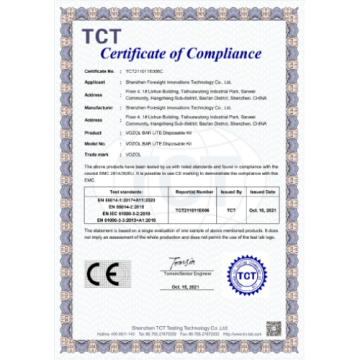
Our commitment to delivering superior LED manufacturing quality is backed by advanced production facilities and rigorous testing protocols. We ensure that every component meets international safety and performance standards.
Utilizing automated SMT (Surface Mount Technology) lines, we achieve micron-level precision in placing LED chips onto PCBs. This ensures consistent electrical performance and reduces the risk of soldering defects common in manual assembly.
Heat is the primary enemy of LED longevity. Our manufacturing process includes strict thermal imaging tests to verify that our heat sinks and thermal interface materials effectively dissipate junction temperature, extending the lifespan of your industrial LED lighting systems.
Every batch of LED driver modules undergoes burn-in testing under varying voltage loads. This stress screening identifies early-life failures (infant mortality) before the products leave our facility, ensuring reliability for your end-users.
Selecting the right LED supplier requires more than just comparing price per unit. Use this checklist to evaluate potential partners based on technical capability, supply chain stability, and after-sales support.
Navigating the LED procurement process can be complex. Whether you are sourcing for a large-scale infrastructure project or specialized industrial lighting, following a structured selection guide will mitigate risk and optimize value.
Start by clearly outlining the photometric needs. Does your project require high-intensity floodlighting for stadiums, or low-glare task lighting for offices? Different applications demand different optical designs and thermal profiles.
Do not focus solely on the upfront cost of the fixture. Calculate the TCO by including energy consumption over the lifespan, maintenance costs, and replacement frequency. High-efficiency commercial LED lighting often yields a faster ROI despite a higher initial price.
Standard off-the-shelf solutions may not fit unique architectural or industrial constraints. Verify if your supplier has R&D capabilities to modify form factors, voltages, or control protocols (like DALI or 0-10V dimming).
A reliable partner provides robust warranty coverage and technical support. Inquire about their response time for troubleshooting and their policy for handling defective batches.
Buyers often encounter specific challenges when transitioning to LED technology or scaling their operations. Here are the most frequent issues and how our team resolves them.
Many buyers report that LEDs dim significantly faster than the specified lifespan, leading to frequent replacements and increased maintenance costs.
This is usually caused by poor thermal management. We utilize high-grade aluminum heat sinks and optimized PCB layouts to keep junction temperatures low. Always request LM-80 data to verify the projected lumen maintenance curve.
Inconsistent color temperature (CCT) between different production runs can ruin the aesthetic of a uniform lighting installation.
We employ strict binning processes for our LED chips, ensuring that all units fall within a tight MacAdam Ellipse (usually 3-step or less). This guarantees visual uniformity even when ordering replacements years later.
The LED source may last decades, but the power supply (driver) often fails first due to heat or voltage spikes.
We select drivers with high power factor (>0.9) and built-in protection against surges, over-voltage, and short circuits. Our modular design allows for easy driver replacement without discarding the entire fixture.
Get answers to the most common technical and commercial questions regarding our LED lighting products and services.
Our standard commercial and industrial LED fixtures are rated for 50,000 to 100,000 hours. This lifespan is calculated based on L70 criteria, meaning the light output drops to 70% of its initial brightness after that period. Actual life depends heavily on operating conditions, specifically ambient temperature.
Yes. We offer a wide range of interchangeable lenses and reflectors, including 10°, 25°, 60°, and asymmetric optics. Our engineering team can also design custom secondary optics for specialized applications requiring precise light distribution.
Absolutely. Our LED systems are compatible with major IoT platforms and control protocols such as DALI, Zigbee, and Bluetooth Mesh. We can integrate occupancy sensors, daylight harvesting, and remote monitoring capabilities directly into the driver or fixture.
For standard catalog items, there is no MOQ. For custom-designed LED solutions involving new tooling or specific branding, the MOQ typically starts at 500 units. We work closely with clients to balance customization needs with production efficiency.
We provide a standard 3-year warranty on all fixtures, with extended options up to 5 years. If a defect occurs, we offer prompt replacement parts or unit swaps. Our technical team assists with root cause analysis to prevent recurrence in future batches.
Privacy statement: Your privacy is very important to Us. Our company promises not to disclose your personal information to any external company with out your explicit permission.
Fill in more information so that we can get in touch with you faster
Privacy statement: Your privacy is very important to Us. Our company promises not to disclose your personal information to any external company with out your explicit permission.