

Send Message
Privacy statement: Your privacy is very important to Us. Our company promises not to disclose your personal information to any external company with out your explicit permission.

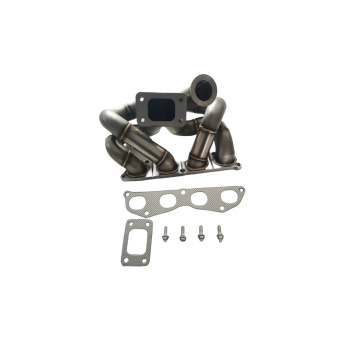




Door panel forming is the critical manufacturing process of shaping raw materials into precise automotive door panels. This specialized technique ensures that each component meets rigorous structural integrity and aesthetic standards required by modern vehicle designs.
As a leading provider in door panel forming technology, our solutions bridge the gap between design innovation and mass production efficiency. Whether you are sourcing for OEM applications or aftermarket needs, understanding the nuances of this forming process is essential for selecting the right partner.
Our door panel forming manufacturing facilities operate under strict quality control protocols. We utilize state-of-the-art machinery and automated inspection systems to guarantee consistency across every batch produced.
We adhere to international standards such as ISO 9001, ensuring that our automotive door panel suppliers meet global expectations for reliability and durability.

When selecting a door panel forming supplier, verify their ability to handle complex geometries and tight tolerances. Look for partners who invest in continuous R&D to stay ahead of industry trends.
Different vehicles require different materials. Ensure your manufacturer has experience with high-strength steels, aluminum alloys, or lightweight composites depending on your specific project needs.
Choose a custom door panel forming service that can scale from prototype runs to full-volume production without compromising lead times or quality consistency.
A robust supply chain is crucial. Verify that your partner has established relationships with raw material providers to prevent delays during market fluctuations.

Use this comprehensive checklist to evaluate potential door panel forming manufacturers before finalizing your procurement decision.
For procurement teams and technical evaluators, here is the standardized specification data typically associated with our door panel forming services.
| Specification Parameter | Details |
|---|---|
| Primary Material | High-Strength Steel, Aluminum Alloy, Composite Materials |
| Forming Method | Stamping, Hydroforming, Press Braking |
| Tolerance Level | ±0.1mm to ±0.5mm (depending on complexity) |
| Surface Treatment | E-Coat, Powder Coating, Painting Ready |
| Application | Passenger Vehicles, Commercial Vehicles, EVs |
| MOQ | Consult for volume-based pricing tiers |
Sourcing door panel forming parts can present several challenges. Understanding these common issues helps buyers avoid pitfalls and ensure smooth production cycles.
Many buyers face issues with panels that do not fit perfectly due to poor tooling maintenance. Always request dimensional reports alongside samples.
Visible scratches, dents, or uneven paint finishes are common complaints. Inspect surface quality under standardized lighting conditions before approval.
Raw material shortages can halt production. Work with suppliers who maintain healthy inventory levels of key materials like steel and aluminum.
Misunderstandings in technical specifications can lead to costly rework. Establish clear communication channels and regular update schedules.
Common materials include high-strength low-alloy (HSLA) steel, aluminum alloys for lightweight applications, and increasingly, fiber-reinforced composites for electric vehicles.
The timeline varies based on complexity. Standard stamping can be completed in minutes per cycle, but tooling setup and initial prototyping may take several weeks.
Yes, we offer fully customized door panel forming services. Our engineering team works closely with clients to develop unique geometries and features tailored to specific vehicle models.
Look for ISO 9001 for general quality management and IATF 16949 specifically for automotive production. These certifications indicate a commitment to consistent quality.
Our door panel forming solutions serve a wide range of industries beyond traditional passenger cars. The versatility of the forming process allows it to adapt to diverse sector requirements.
Standard OEM door panels for sedans, SUVs, and crossovers, focusing on safety, aerodynamics, and interior aesthetics.
Durable, heavy-duty door panels designed for commercial transport vehicles, emphasizing strength and noise reduction.
Lightweight composite door panels optimized for range efficiency in electric vehicles, reducing overall vehicle weight.
Specialized panels for vehicle customization, restoration projects, and aftermarket performance upgrades.


Privacy statement: Your privacy is very important to Us. Our company promises not to disclose your personal information to any external company with out your explicit permission.
Fill in more information so that we can get in touch with you faster
Privacy statement: Your privacy is very important to Us. Our company promises not to disclose your personal information to any external company with out your explicit permission.