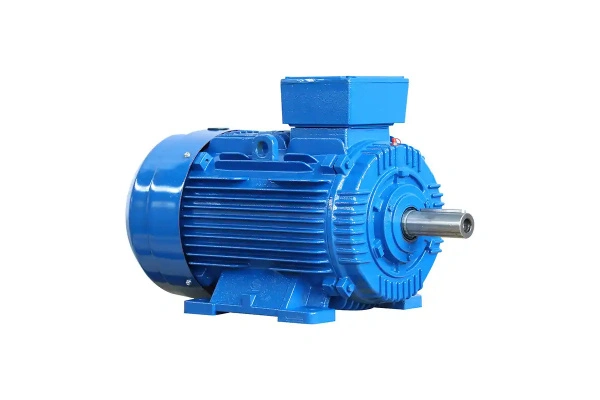
An asynchronous motor, commonly known as an induction motor, is the workhorse of modern industrial applications. It operates by drawing power from the electrical grid to create a rotating magnetic field in the stator, which induces current in the rotor, causing it to turn slightly slower than the synchronous speed. This slight difference in speed, or "slip," is what generates torque and drives mechanical loads.
Core Operating Principle
The asynchronous motor relies on electromagnetic induction rather than direct electrical connection to the rotor. This robust design eliminates the need for brushes and slip rings, resulting in a maintenance-free operation that can run continuously for years without significant intervention.
Key Characteristics
Known for their simplicity and ruggedness, asynchronous motors offer high starting torque and reliable performance across various environments. They are highly efficient when properly sized and represent the most cost-effective solution for constant-speed industrial machinery.
Quality & Manufacturing Standards
Precision Engineering & Rigorous Testing
Our asynchronous motors are manufactured using advanced CNC machining centers and automated winding lines to ensure exceptional consistency and performance. Every unit undergoes strict quality control protocols, including dynamic balancing, insulation resistance testing, and full-load efficiency verification before leaving the factory.
We adhere to international standards such as IEC 60034 and NEMA MG 1, ensuring that our motors meet global requirements for safety, efficiency, and durability. Our commitment to quality extends to the sourcing of raw materials, utilizing high-grade copper windings and premium silicon steel laminations to minimize energy losses and maximize thermal stability.
Industry Applications of Asynchronous Motors
Asynchronous motors are ubiquitous in modern industry due to their versatility and reliability. They power everything from small household appliances to massive industrial processing plants. Their ability to handle continuous duty cycles makes them ideal for applications requiring constant rotation and steady torque delivery.
How to Choose the Right Asynchronous Motor
Selecting the correct asynchronous motor involves analyzing several critical parameters to ensure optimal performance and longevity. A mismatch in specifications can lead to inefficiency, overheating, or premature failure. Buyers must evaluate the specific demands of their application against the motor's capabilities.
Power & Torque Requirements
Determine the required horsepower (HP) or kilowatt (kW) rating based on the load. Consider both running torque and starting torque; some applications, like crushers or mixers, require high starting torque to overcome initial inertia.
Speed & Voltage Compatibility
Verify the supply voltage and frequency (e.g., 230V/60Hz or 400V/50Hz). Select the appropriate pole count (2-pole, 4-pole, etc.) to achieve the desired RPM. Ensure the motor frame size fits the physical constraints of your machinery.
Enclosure & Environment
Choose the right enclosure type (Open Drip Proof, Totally Enclosed Fan Cooled, or Explosion Proof) based on environmental factors such as dust, moisture, corrosive chemicals, or explosive gases present in the operating area.
Efficiency Class
Look for motors meeting IE2 (High Efficiency) or IE3 (Premium Efficiency) standards. Higher efficiency classes reduce energy consumption and operational costs over the motor's lifetime, often providing a quick return on investment.
Buyer Decision Checklist for Asynchronous Motors
Before finalizing your procurement order, use this comprehensive checklist to validate technical specifications, compliance requirements, and supplier capabilities. This ensures you receive a product that perfectly matches your operational needs.
Load Analysis: Have you calculated the peak and continuous load requirements accurately?
Mounting Configuration: Is the foot-mounted, flange-mounted, or C-face configuration compatible with your gearbox or driven equipment?
Braking Requirements: Does the application require an integrated DC brake for rapid stopping or holding positions?
Thermal Protection: Are PTC sensors or thermistors embedded within the windings for overload protection?
Certifications: Do you require specific regional certifications such as CE, UL, CSA, or ETL for your market?
Warranty & Support: What is the manufacturer's warranty period and availability of spare parts?
Customization: Can the supplier provide custom shaft lengths, keyways, or specialized paint colors?
Product Specification Criteria
When evaluating asynchronous motors for procurement, focus on standardized technical criteria that define performance and compatibility. These specifications form the basis of any technical inquiry or request for quotation (RFQ).
Technical Parameters
Standard parameters include rated power (kW/HP), rated speed (RPM), rated voltage (V), rated current (A), power factor, and efficiency percentage. Frame sizes follow IEC 60072 standards for interchangeability.
Performance Curves
Review torque-speed curves to understand pull-up torque, breakdown torque, and locked-rotor torque. These curves indicate how the motor will behave under varying load conditions during startup and operation.
Dimensional Data
Access detailed dimension drawings specifying shaft diameter, mounting hole spacing, terminal box position, and overall length. Accurate dimensional data is crucial for integration into existing mechanical assemblies.
Frequently Asked Questions
Common questions regarding asynchronous motor selection, installation, and maintenance.
Can asynchronous motors be used with Variable Frequency Drives (VFDs)?
Yes, standard asynchronous motors can operate with VFDs. However, for optimal performance at low speeds, consider using VFD-rated motors which feature enhanced insulation and independent cooling fans to prevent overheating when the main shaft slows down.
What is the difference between single-phase and three-phase asynchronous motors?
Three-phase motors are more efficient, smoother-running, and self-starting, making them ideal for industrial applications. Single-phase motors are typically used in lighter residential or commercial applications where three-phase power is not available.
How do I determine the correct motor frame size?
Frame size is determined by the shaft height and mounting dimensions. Refer to the IEC or NEMA standards charts based on your required power output and physical space constraints. Always verify clearance for ventilation and cable connections.
What maintenance is required for asynchronous motors?
Maintenance is minimal but essential. Regularly check and replace bearings if noise or vibration increases. Keep ventilation slots clean to prevent overheating. Periodically measure insulation resistance to detect early signs of winding degradation.
Send Message
Privacy statement: Your privacy is very important to Us. Our company promises not to disclose your personal information to any external company with out your explicit permission.
We will contact you immediately
Fill in more information so that we can get in touch with you faster
Privacy statement: Your privacy is very important to Us. Our company promises not to disclose your personal information to any external company with out your explicit permission.