


Send Message
Privacy statement: Your privacy is very important to Us. Our company promises not to disclose your personal information to any external company with out your explicit permission.

A three phase asynchronous motor, often referred to as an induction motor, is the workhorse of modern industrial machinery. It converts electrical energy into mechanical motion through electromagnetic induction. Unlike single-phase motors, these three phase induction motors offer superior efficiency, higher starting torque, and smoother operation for heavy-duty applications.
When a three-phase alternating current flows through the stator windings, it generates a rotating magnetic field. This field induces currents in the rotor bars, creating torque that drives the shaft. The rotor always rotates slightly slower than the synchronous speed, hence the term "asynchronous."
Our manufacturing process for three phase asynchronous motors adheres to strict international standards. From raw material selection to final testing, every step ensures reliability and performance under demanding industrial conditions.
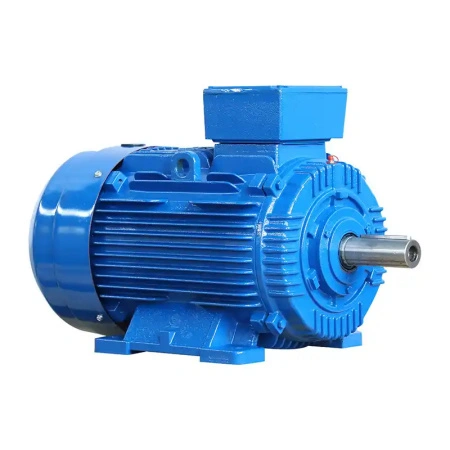
Utilizing automated winding machines and precision casting techniques to ensure consistent quality across all three phase electric motor units.
We use high-grade copper windings and premium silicon steel laminations to maximize efficiency and minimize energy loss in industrial motors.
Each motor undergoes vibration analysis, insulation resistance testing, and thermal cycling to guarantee long-term durability.
Selecting the appropriate three phase asynchronous motor requires careful consideration of your specific application requirements. Factors such as load type, operating environment, and power supply characteristics play a crucial role in ensuring optimal performance.
Ensure the motor's horsepower matches your peak load requirements. Consider both running torque and starting torque needs for heavy machinery.
Verify physical dimensions and mounting configuration (foot-mounted, flange-mounted) to fit your existing equipment infrastructure.
Choose between Open Drip Proof (ODP) for clean environments or Totally Enclosed Fan Cooled (TEFC) for dusty or wet conditions.
Look for IE3 or IE4 premium efficiency ratings to reduce long-term energy costs and meet regulatory standards.
Before finalizing your purchase of three phase asynchronous motors, use this comprehensive checklist to evaluate suppliers and product specifications. This guide helps mitigate risk and ensures you get the best value for your industrial power needs.
Understanding the technical schema of three phase asynchronous motors is essential for engineers and procurement specialists. Below are the standard parameter categories used to define motor capabilities.
Buyers of three phase asynchronous motors often encounter specific challenges during the procurement and installation process. Addressing these common problems upfront can save time and prevent costly operational downtime.
Ensure the motor nameplate voltage matches your facility's supply. Using a 400V motor on a 480V system can cause overheating and insulation failure.
Always verify NEMA or IEC frame dimensions before ordering. Physical incompatibility with existing mounts leads to expensive custom fabrication.
For enclosed spaces, specify TEFC motors. ODP motors may overheat if ventilation paths are blocked by dust or debris.
Improper alignment with driven equipment causes premature bearing failure. Use laser alignment tools during installation.
Get answers to the most common questions regarding the selection, installation, and maintenance of three phase asynchronous motors.
Privacy statement: Your privacy is very important to Us. Our company promises not to disclose your personal information to any external company with out your explicit permission.
Fill in more information so that we can get in touch with you faster
Privacy statement: Your privacy is very important to Us. Our company promises not to disclose your personal information to any external company with out your explicit permission.