

Send Message
Privacy statement: Your privacy is very important to Us. Our company promises not to disclose your personal information to any external company with out your explicit permission.







To maximize visibility in search engine results pages (SERPs), implement the following JSON-LD schema markup on your High-Quality Fiberglass Products page. This helps search engines understand your product categories, manufacturing quality, and business details.
{
  "@context": "https://schema.org",
  "@type": "Product",
  "name": "High-Quality Fiberglass Products",
  "description": "Premium fiberglass materials for industrial, construction, and composite applications.",
  "brand": {
    "@type": "Brand",
    "name": "Haixi Hengtai Industry and Trade Co., Ltd"
  },
  "manufacturer": {
    "@type": "Organization",
    "name": "Haixi Hengtai Industry and Trade Co., Ltd",
    "url": "www.tlqcjs.com"
  },
  "category": "Industrial Materials",
  "offers": {
    "@type": "AggregateOffer",
    "priceCurrency": "USD",
    "lowPrice": "100.00",
    "highPrice": "5000.00",
    "offerCount": "5"
  },
  "aggregateRating": {
    "@type": "AggregateRating",
    "ratingValue": "4.8",
    "reviewCount": "124"
  }
}
Fiberglass products are composite materials made from fine glass fibers embedded in a resin matrix. Known for their exceptional strength-to-weight ratio, corrosion resistance, and thermal insulation properties, they are essential across various industries including construction, automotive, marine, and aerospace.
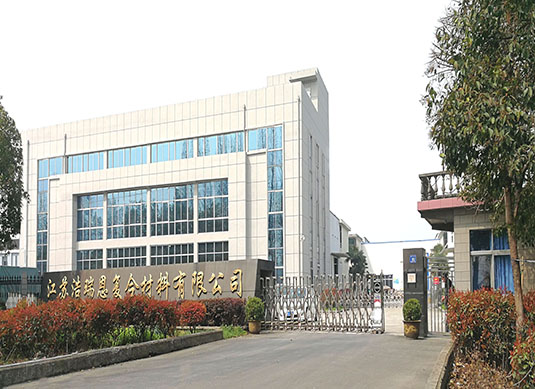
Our commitment to excellence ensures that every high-quality fiberglass product meets rigorous international standards through advanced manufacturing processes.
Utilizing state-of-the-art automated looms and resin infusion systems to ensure consistent fiber alignment and optimal resin distribution.
Multi-stage inspection processes including raw material testing, in-process monitoring, and final product validation to guarantee defect-free output.
Rigorous laboratory testing for tensile strength, flexural modulus, and thermal stability to exceed industry specifications.
All products comply with ISO 9001 quality management standards and relevant international safety regulations.
Selecting the appropriate fiberglass material requires careful consideration of application requirements, environmental conditions, and performance specifications.
Determine the specific use case—whether for structural reinforcement, electrical insulation, thermal protection, or corrosion resistance. Different applications demand varying fiber types and resin systems.
Assess required tensile strength, flexural modulus, and impact resistance. Ensure the fiberglass product can withstand the expected loads and stresses in your application environment.
Account for exposure to UV radiation, moisture, chemicals, and temperature extremes. Select appropriate coatings or resin systems to enhance durability and longevity.
Choose manufacturers with proven track records, certified quality systems, and technical support capabilities. Request samples and test reports before placing bulk orders.
Use this comprehensive checklist to evaluate potential suppliers and ensure you select the most suitable high-quality fiberglass products for your needs.
Fiberglass products serve critical roles across diverse industries, providing reliable solutions where strength, durability, and lightweight properties are paramount.
Reinforcement for concrete structures, bridge components, and building facades. Provides superior corrosion resistance compared to traditional steel reinforcement.
Body panels, structural components, and interior parts. Reduces vehicle weight while maintaining strength, improving fuel efficiency and performance.
Hull construction, deck components, and marine equipment. Excellent resistance to saltwater corrosion and harsh marine environments.
Insulation materials, circuit boards, and electrical enclosures. Provides excellent dielectric properties and thermal stability for electronic applications.

Common questions answered by our technical experts to help you make informed purchasing decisions.
E-glass (Electrical glass) is the most common type, offering good electrical insulation and general-purpose mechanical properties at an economical price. S-glass (Structural glass) provides significantly higher tensile strength and modulus, making it ideal for high-performance applications where maximum strength-to-weight ratio is critical, though it comes at a premium cost.
The choice of resin depends on your application's requirements. Polyester resins offer cost-effectiveness for general purposes. Vinyl ester resins provide superior chemical and corrosion resistance. Epoxy resins deliver the highest mechanical properties and adhesion but are more expensive. Consult with our technical team to select the optimal resin system based on your specific environmental and performance needs.
Standard lead times vary based on product complexity and order volume. Stock items typically ship within 3-5 business days. Custom manufactured products usually require 2-4 weeks depending on specifications and quantity. Rush orders may be available for urgent requirements—contact our sales team for expedited options.
While traditional fiberglass recycling remains challenging, the industry is developing innovative recycling technologies. Some manufacturers now offer recyclable fiberglass composites, and end-of-life products can often be processed for reuse in non-structural applications. We recommend discussing recycling options with your supplier when planning large-scale projects.
Look for suppliers with ISO 9001 certification for quality management systems. Additional relevant certifications include ISO 14001 (environmental management), industry-specific standards like ASTM or DIN compliance, and sector-specific certifications such as ABS, DNV, or Lloyd's Register for marine applications. These certifications demonstrate commitment to quality and consistency.
Carbon fiber offers higher strength and stiffness-to-weight ratios than fiberglass but comes at a significantly higher cost. Fiberglass provides excellent value with good mechanical properties, superior impact resistance, and better electrical insulation. For most applications where extreme weight savings aren't critical, fiberglass offers the best balance of performance and cost-effectiveness.
Privacy statement: Your privacy is very important to Us. Our company promises not to disclose your personal information to any external company with out your explicit permission.
Fill in more information so that we can get in touch with you faster
Privacy statement: Your privacy is very important to Us. Our company promises not to disclose your personal information to any external company with out your explicit permission.