
Send Message
Privacy statement: Your privacy is very important to Us. Our company promises not to disclose your personal information to any external company with out your explicit permission.

Abrasive tape is a versatile industrial tool designed for surface preparation, finishing, and cleaning. Unlike traditional sandpaper sheets, this flexible abrasive material comes in roll form, allowing for easy application on curved, contoured, or hard-to-reach surfaces.
As a leading supplier of high-quality abrasive tape, we understand that the right choice can significantly impact efficiency and finish quality. Our abrasives are engineered to remove burrs, smooth rough edges, and prepare surfaces for coating or bonding with precision and consistency.
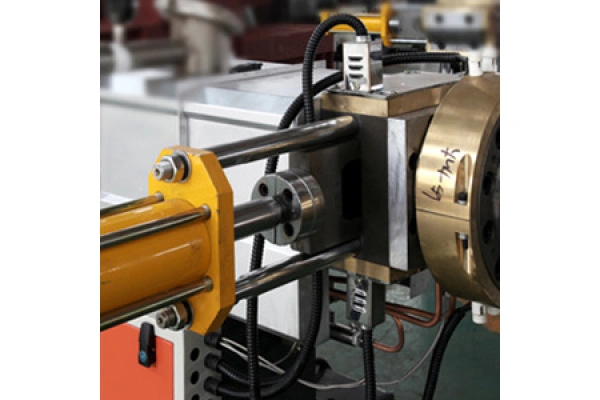
Our abrasive tape manufacturing process utilizes advanced electrostatic coating techniques. This ensures an even distribution of abrasive grains, resulting in consistent cutting performance across the entire roll length.
We select high-strength cloth, paper, or polyester backings tailored to specific applications. These materials provide excellent tear resistance and flexibility, allowing the abrasive tape to conform to complex geometries without breaking.
Every batch of abrasive tape undergoes strict testing for grit uniformity, adhesive strength, and tensile strength. Our commitment to quality ensures that our products meet international standards for durability and performance.
Abrasive tape is essential for removing weld spatter, smoothing cut edges, and blending welds in stainless steel, aluminum, and carbon steel fabrication. Its flexibility allows it to reach into corners and along seams where rigid discs cannot.
In automotive repair and manufacturing, abrasive tape is used for body filler smoothing, rust removal, and paint preparation. It is also employed in trimming excess material from plastic components and polishing chrome trim.
For woodworking, abrasive tape facilitates fine sanding of curved furniture pieces, door frames, and cabinetry. It helps achieve a smooth finish prior to staining or varnishing, ensuring a professional result.
The marine industry uses specialized waterproof abrasive tapes for hull maintenance and gelcoat repair. In aerospace, precision abrasive tapes are utilized for composite material finishing and surface preparation for bonding aircraft components.
Does the abrasive type match your substrate? Ensure compatibility between grain material and workpiece to prevent loading and ensure efficient cutting.
Consider the volume of work. High-production environments require premium ceramic or zirconia grains for extended tool life and reduced downtime.
Are you working on flat or contoured surfaces? Flexible backing materials are crucial for achieving uniform results on curves and irregular shapes.
Evaluate the required hold time. Standard adhesive is sufficient for short tasks, while high-tack options prevent peeling during aggressive sanding.
Check for dust extraction compatibility. Open-coat abrasive tapes reduce clogging and facilitate better dust collection, improving workplace air quality.
Calculate total cost per square foot. Premium tapes may have a higher upfront cost but offer longer life and faster cycle times, reducing overall operational expenses.
If your abrasive tape loses cutting power quickly, you may be using the wrong grain type for the material. Soft metals can glaze aluminum oxide, while hard steels may wear down silicon carbide too fast. Switching to a tougher ceramic grain often resolves this issue.
Leaving adhesive behind after removal is a common complaint. This usually occurs when low-quality adhesive is used or when the tape is exposed to excessive heat during sanding. Using high-tack, clean-removal tapes minimizes this risk.
Tearing often happens when sanding sharp corners or using excessive pressure. Choosing a reinforced cloth or polyester backing increases tear resistance. Additionally, applying even pressure and avoiding folding the tape over itself extends its lifespan.
An inconsistent surface finish can result from a worn-out pad underneath the tape or improper technique. Always use a compliant sanding pad for flexible surfaces and ensure the base surface is relatively uniform before applying the abrasive tape.
To enhance search engine visibility and rich snippet potential, implement structured data markup for your abrasive tape products. Use Product schema to detail specifications like grit size, backing type, and dimensions. Include Offer schema for pricing and availability information. For authoritative content, apply Article or HowTo schema to guides explaining abrasive tape usage, helping search engines understand the educational value of your page and potentially displaying it in featured snippets.
Privacy statement: Your privacy is very important to Us. Our company promises not to disclose your personal information to any external company with out your explicit permission.
Fill in more information so that we can get in touch with you faster
Privacy statement: Your privacy is very important to Us. Our company promises not to disclose your personal information to any external company with out your explicit permission.